Telescope

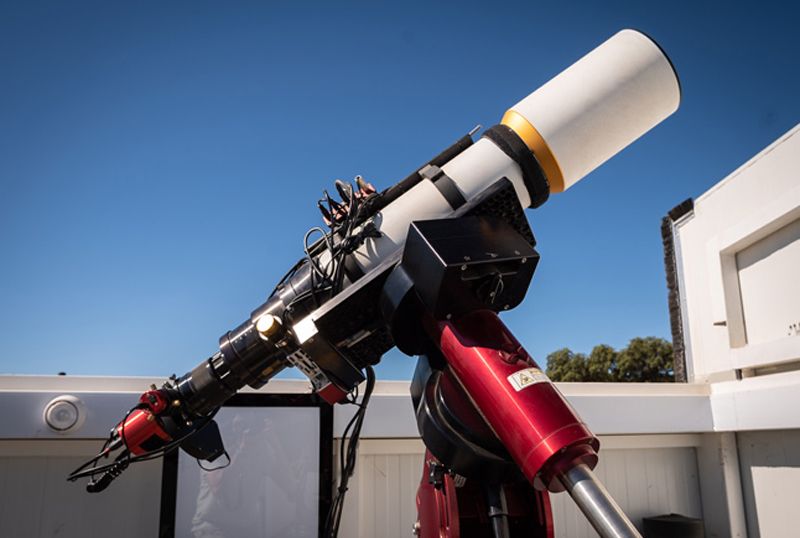
A William Optics FLT132 I hear you mutter, well before you go any further try it I dare you, it will shock you with how good it is I tell you. I have owned many 5” APO’s and this is as good if not better than all of them.

Its field is flat, it has tiny stars and colour correction is spot on, combine this with a relatively fast F5.6 and you have a short/medium focal length astrograph that ticks all the boxes.

This telescope when combined with a 4/3rds sensor have a smaller FOV so is a great way of getting up close and personal without having to use massive focal length telescopes and all the added expense that entails.

CMOS Camera

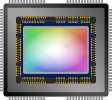
Just in case you have never used CMOS and have been using CCD like the rest of us for the last million years then let me tell you it requires a different approach, you can forget long subs as the are not needed and at most times detrimental to your image quality.

Allowing for CMOS’s sensitivity, higher dynamic range and super low read noise broadband imaging typically 60s is ample and 120s for narrowband, you just needs a lot more of them of course. This camera is set to Unity Gain as our default.

Pier-7 is an unguided system so the maximum sub length is 300s

Telescope

William Optics FLT-132

Camera

ZWO ASI294MM Pro

Mount

Paramount MX

Equipment List

Telescope
William Optics FLT132 F5.6 APO
Mount
Paramount MX
Camera
ZWO ASI294MM Pro CMOS Camera
Filter Wheel
ZWO 7 Position
Filters
Astrodon LRGB HA OIII SII NII 3nm
Guide Camera
Unguided
Guider
OAG Integrated
Focuser
ZWO EAF
Power & Dew Control
Mount Hub pro V4

Sony IMX492

4/3" CMOS Sensor
21.7mm Diagonal
4144x2822 pixels
4.63µm

Bayer Matrix Parameters

N/A

  • 1.32° x 1°

  • 0.62"/PX

  • 772mm Focal Length

  • F/5.6

  • 25º Imaging Horizon Limits

  • +181º


  • Recommended sub lengths

Broadband Imaging

FilterBrightDim
Clear
n/a

n/a

Lum
10-120s

120-300s

Red
10-120s

120-300s

Green
10-120s

120-300s

Blue
10-120s

120-300s

Narrowband Imaging

FilterBrightDim
Ha 3nm
60-180s

180-300s

Hb
n/a

n/a

O3 3nm
60-180s

180-300s

S2 3nm
60-180s

180-300s

N2 3nm
60-180s

180-300s

  • Imaging subjects with brighter cores will of course require shorter sub lengths for HDR, your personal experience will be needed to gauge this yourself.

  • Please remember this is only a guide above, we are just trying to help you have the best experience possible remote imaging with Roboscopes.

  • Roboscopes supply the site and control the equipment but you choose everything else from filters, object/co-ordinates to sub lengths. So you need to exercise due diligence and experience when booking because if you fill the booking form out with incorrect details then you will get precisely that.

  • It is not Roboscopes responsibility to check your detailed requirements after you have booked.

  • Filter weights

Get accurate star colours with our filter weights

FilterWeight
Red

TBA

Green

TBA

Blue

TBA

Calibration Files

This pier has a FREE calibration library, this includes a dark library that correlates to the most common subs lengths used, see below

  • 30s Darks
  • 45s Darks
  • 60s Darks
  • 120s Darks
  • 180s Darks
  • 240s Darks
  • 300s Darks

  • 600s Darks

  • 900s Darks

  • 1200s Darks

  • 1800s Darks

  • Bias Frames

  • Flat Frames - L, R, G, B, Ha, o3, S2

If you choose more individual sub lengths eg 550s, then darks are not included in the price and are taken for you on an individual basis. Please add darks to your imaging run in checkout.